
VAAFT
Best Hernia Surgery in India
Treatment is the only effective way to repair hernias. At Pristyn Care, we employ both open and laparoscopic techniques that are safe and provide immediate relief from the symptoms. Get in touch with us and get advanced Hernia Surgery cost-effectively.

What is Hernia Surgery ?
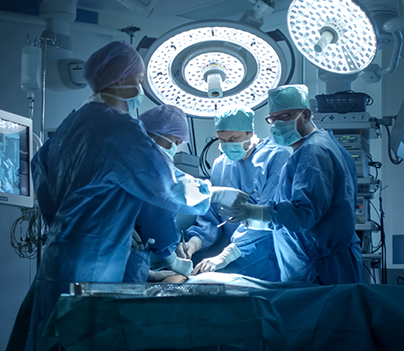
Hernia Surgery is the procedure to repair the weakened muscle wall that has a hole in it and push the herniated organ back into its original location. The treatment can be performed in two ways. If the wall is repaired without any support, the treatment is called herniorrhaphy. If a mesh is used to support the muscle wall and provide reinforcement while it heals, the procedure is called hernioplasty.
Book Doctor Appointment
Best Hernia Surgeon In India
Hernia Surgery Overview :
Diagnosis
Before opting for treatment, the doctor will physically examine the protruding area. For an accurate diagnosis, the patient might be asked to stand, strain or cough. For further diagnosis and to identify the safest technique for repair, the doctor might prescribe imaging tests such as an abdominal ultrasound, CT scan, or MRI.
Based on the test results, the doctor will determine the most suitable method and proceed with the treatment.
Risks & Complications
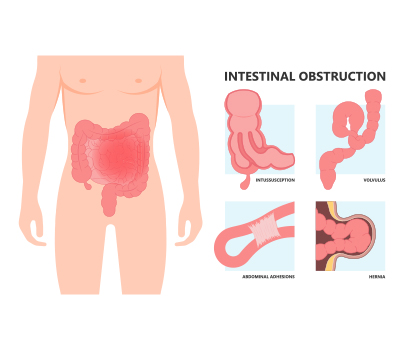
There might be a number of complications involved during a hernia repair treatment. Although rare, the general risks of a surgical hernia removal procedure include:
- Reaction of anesthesia
- Infection of the wound
- Blood clots
- Urinary tract injury
Benefits of Laparoscopic Hernia Repair
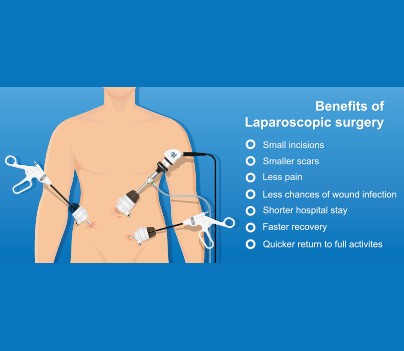
There is no doubt that laparoscopic hernia repair is beneficial for the patient. As compared to open surgery, the procedure is minimally invasive and has shorter downtime. The key benefits of laparoscopic Hernia Surgery are given below-
- The incisions made during the surgery are keyhole-sized, which reduces further damage to the muscle wall.
- As the incisions are small, pain after the surgery is also minimal.
- Laparoscopic repair allows you to get back to daily activities quicker.
- The chances of bleeding and infection are also minimal during laparoscopic Hernia Surgery.
- Hospitalization longer than 24 hours won’t be necessary in case of laparoscopic treatment.
- The perforation in the muscle wall will recover faster than in open surgery.
Types of Hernia Surgery
Open Hernia Repair Treatment
This is the conventional and commonly performed hernia repair surgery around the globe. In open surgery for hernia repair, the surgeon makes a cut or incision in the groin, after which the hernia “sac” containing the bulging intestine is identified.
Laparoscopic Hernia Repair Treatment
This is comparatively a much-advanced procedure for inguinal Hernia Surgery. Laparoscopic hernia repair surgery, also known as minimally invasive surgery, refers to the surgical procedure that is performed .
Robotic Hernia Repair Surgery
Robotic Hernia Repair treatment is very similar to that of laparoscopic hernia repair treatment as it uses a laparoscope that guides the surgeon to view inside the abdomen and repair the hernia.This type of treatment only differs from laparoscopic treatmentto the extent that.
Frequently Asked Questions on Hernia
No, hernia mesh is not used for all types of hernia repair surgery. In many cases, the perforation in the abdominal wall can be closed without any support or reinforcement. Thus hernia mesh is not needed every time.
Yes. At Pristyn Care, we also perform hernia mesh removal treatment as required. If you are not comfortable with the hernia mesh or it is causing problems, it can be removed safely through another surgical procedure.
Hernia surgery can be performed under general, spinal, or local anesthesia. The anesthetist will ask you some questions to determine if you are allergic to some components of general anesthesia. If so, then either spinal or local anesthesia will be used.
You will most likely need to take follow up with the doctor after 7-10 days of surgery. During this follow-up, the doctor will monitor the healing process and remove the stitches (if any). Only then will the doctor decide if further follow-ups are needed.
Alternative Treatment Options for Hernia
The only effective way to repair a hernia is surgery. But in some cases, when the condition is diagnosed early, the doctor may suggest the following-
- Watchful Waiting- This method is recommended when a hernia is not symptomatic. The doctor will suggest watching out for the alarming symptoms and limiting physical activities that can make the condition worse.
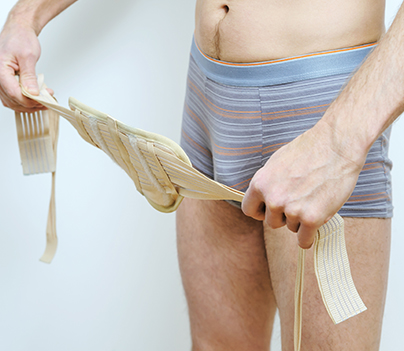
- Truss– A truss is a supportive undergarment that is specifically designed for men to keep the protruding tissue in place and provide comfort. However, the truss may provide only temporary comfort.
In both cases, the patient will be only delaying Hernia Surgery. Ultimately, surgery will be required to repair the muscle wall and keep the organ in place.
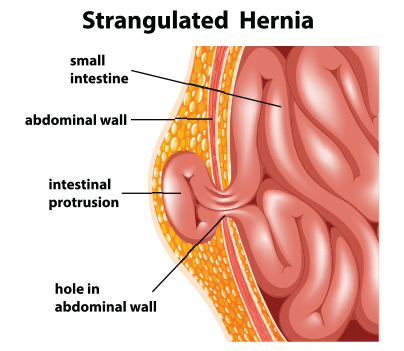
What happens if a hernia is not treated on time?
If a hernia is left untreated, it can block the muscle tissues from inside, preventing blood circulation in the tissues, and can lead to life-threatening complications like strangulation or incarceration. When the intestine gets stuck in the inguinal canal, a person might also experience symptoms like nausea, constant fever, blood in stools, vomiting, stomach pain, and a painful lump in the groin. Such cases are life-threatening and are considered medical emergencies.

Recovery After Hernia Surgery
Recovery is the most crucial period for a person who had hernia repair treatment. The patient can expect to recover completely within 4 to 6 weeks after open hernia surgery. With laparoscopic Hernia Surgery, the recovery will be faster, i.e., around 3 to 4 weeks.
During the recovery period, the following things must be kept in mind for successful recovery.
- Pay attention to the surgical site and make sure that it stays clean and dry.
- Do not lift any object heavier than 10 pounds until the doctor permits.
- Avoid straining during bowel movements and other activities.
- Eat a healthy diet (fiber-rich) to avoid constipation.
Types of Hernia
Inguinal Hernia:
Inguinal Hernia occurs when the internal organ pushes through the muscle wall around the inguinal canal. It can be a direct or indirect inguinal hernia. This type of hernia is more common in males.
Epigastric Hernia:
An epigastric hernia is when part of the intestines pushes through the abdominal muscles between the belly button and the chest. Small ones cause no symptoms and doesn’t need treatment. Larger ones that do cause symptoms won’t heal on their own, but surgery can fix the problem.
Umbilical Hernia:
Umbilical Hernia is common in babies and pregnant women. It arises when intra-abdominal contents protrude through the muscle wall because of weakness around the belly button (where the umbilical cord is located).
Incisional Hernia:
Incisional Hernia, also known as ventral hernia, arises when the muscle wall hasn’t healed from previous abdominal surgery.
Our Patient Love Us
We develop & create quality care
Address
Center 1 :-
Kailash Sagar Complex , Above
SBI Bank Road Number 5 Sector 22 Near Gh-5 circle,
Gandhinagar, Gujarat
Center 2 :-
Sushrut Hospital, First Floor, near Gayatri Temple, Mansa, Gandhinagar, Gujarat
Center 3 :-
Orbit Mall, D block 301-306, Reliance circle, Sargasan, Gandhinagar, Gujarat.